In public health, sustainability often comes up toward the end of a conversation. We identify a need, develop a program, find funding, implement it, and then ask: How do we sustain this? Too often, the answer is another grant.
Grants have built much of our public health infrastructure. Government and philanthropy have funded essential services, supported innovation, and strengthened organizations. That investment remains essential. But I wonder if this moment also requires us to think more broadly about what sustainability means, and how we build for it from the beginning.
In a recent O’Neill Institute brief, I wrote about the need to strengthen and adapt the systems that have made progress against HIV possible. This piece picks up one thread from that conversation: how we finance and sustain the infrastructure underneath that progress.
Rethinking sustainability
Sustainability is about money. But it is also about the strength of our institutions, the capacity of community organizations, the workforce needed to deliver services, policies that support rather than complicate access, partnerships that endure, and systems capable of adapting when the environment around them changes. That makes sustainability something to design for, not simply something to address when funding becomes uncertain.
Public resources are under pressure. Community organizations are navigating rising costs, workforce challenges, funding uncertainty, and growing needs. For some, these are not abstract questions about long-term sustainability. They are immediate questions about maintaining staff, keeping programs operating, and continuing to serve their communities.
Yet this pressure comes at a moment of extraordinary possibility. Advances in science and technology are creating new opportunities for prevention, treatment, and care that would have seemed unimaginable not long ago. But innovation only matters if it reaches people. The challenge, then, is not simply to sustain individual programs. It is to sustain the capacity to turn those possibilities into better health over time.
What happens after the breakthrough?
We rightly celebrate scientific breakthroughs: a new medicine, a better prevention tool, a technology that can change lives. But discovery is only the beginning. How does it reach communities? Do organizations have the infrastructure and resources to deliver it? And can the system sustain it long enough to make a difference? Availability is not the same as access, and access is not the same as capacity. A medicine can exist and even be covered, but that does not mean a provider has the workforce, financing, systems, or support needed to deliver it effectively.
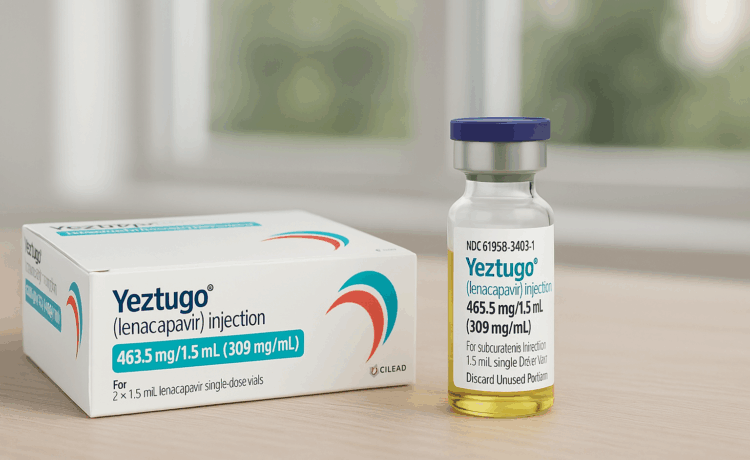
We can see this with the growing availability of long-acting HIV medications. A recent O’Neill Institute brief illustrates how something as technical as whether a medication is covered through a pharmacy or medical benefit can shape patient access and affordability. It can also affect whether safety-net providers have the financial and operational capacity to deliver it. The breakthrough may be scientific, but whether it reaches people is also a question of financing, reimbursement, infrastructure, and policy.
That is why financing cannot be something we think about only after we have designed the intervention. It must be part of the strategy itself. That means looking more creatively at how different resources can work together: government funding, healthcare reimbursement, philanthropy, earned revenue, and other mission-aligned financing approaches. Funding asks where the money comes from. Financing asks how resources flow, who bears risk, what gets reimbursed, what organizations can reinvest, and whether the structure underneath care makes delivery sustainable.
Braiding different sources of funding means coordinating them around a shared purpose while allowing each to play a distinct role. Public funding can sustain essential services and address needs that market-based models cannot. Reimbursement and earned revenue can support ongoing delivery and reinvestment. Philanthropy can provide flexible resources to test new approaches, build capacity, or fill gaps. These resources can also build on one another over time, with one helping create the foundation needed to unlock another.
No single approach will work everywhere. Organizations and communities have different missions, capacities, populations, and opportunities. We should test different approaches and share what we learn about where they work, under what conditions, and for whom.
When care creates capacity
One possibility worth exploring is whether the delivery of care itself can help strengthen the organizations and infrastructure that make access possible.
Clinic-owned pharmacy offers one example. Through the federal 340B program, eligible safety-net providers can purchase medicines at discounted prices, creating financial resources that can be reinvested in patient care and community services. An in-house pharmacy can create a more direct connection between delivering medicines, generating resources, and reinvesting in the infrastructure around care. But the ability to generate and reinvest those resources also depends on how medicines are covered, purchased, and reimbursed. Those decisions can have significant consequences for safety-net providers, particularly those operating on thin margins.
The program has also faced scrutiny over how those funds are used and whether they consistently translate into benefits for the communities served by participating organizations. Those concerns matter. They also make it important to understand what responsible reinvestment looks like in practice, and what organizations need to translate that reinvestment into stronger access and services.
One model worth learning from is Alchemy’s, particularly how it pairs pharmacy with the infrastructure needed to turn generated resources into expanded care. Alchemy works with safety-net providers on staffing, workflows, outreach, partnerships, and new models of service delivery.
The point is not that every community organization should open a pharmacy or that this model is the sole answer to the sustainability challenges facing public health. It isn't. The value is in understanding what the model can teach us about reinvestment, community capacity, and the relationship between healthcare delivery and financial sustainability.
It's also a model I'll have the opportunity to explore more closely as an Alchemy Senior Fellow, including what works, what doesn't, and what lessons might be useful to the broader field.
Not an either-or
There is an important tension here. It is especially visible right now. Recent amfAR analyses underscore both the value of CDC's direct investment in community-based HIV prevention and what could be lost if that funding disappears. CDC-funded CBOs reach people other parts of the health system often do not, making continued public investment in this infrastructure essential.
Exploring new financing models cannot become an excuse to retreat from that responsibility. Government has responsibilities that cannot and should not be replaced by philanthropy, earned revenue, or private-sector innovation. Some essential public health functions will never generate revenue. Nor should we expect them to. Community organizations should not have to become businesses simply to survive. And financial sustainability cannot become the measure of whether a service or population is worthy of investment.
At the same time, moments of funding uncertainty reinforce the value of having multiple sources of support where other options are possible. But diversification itself takes capacity. Organizations already stretched thin may not have the staff, capital, technical expertise, or administrative support to pursue new revenue opportunities. Asking them simply to “diversify” risks creating another burden rather than a solution.
Building for what comes next
For decades, public health has been extraordinarily innovative in developing new interventions, technologies, partnerships, and ways of reaching communities. We need to bring that same creativity to how we finance and sustain the infrastructure underneath that work.
This also requires looking beyond the survival of individual programs. Protecting what works matters. But we should also ask what kind of public health system those programs need to live within, and whether that system is capable of supporting what comes next. As Matthew Rose recently wrote in POZ, “A community cannot spend a grant on services that its local system has no capacity to deliver.” Building that capacity is not separate from delivering better health outcomes. It is part of the work.
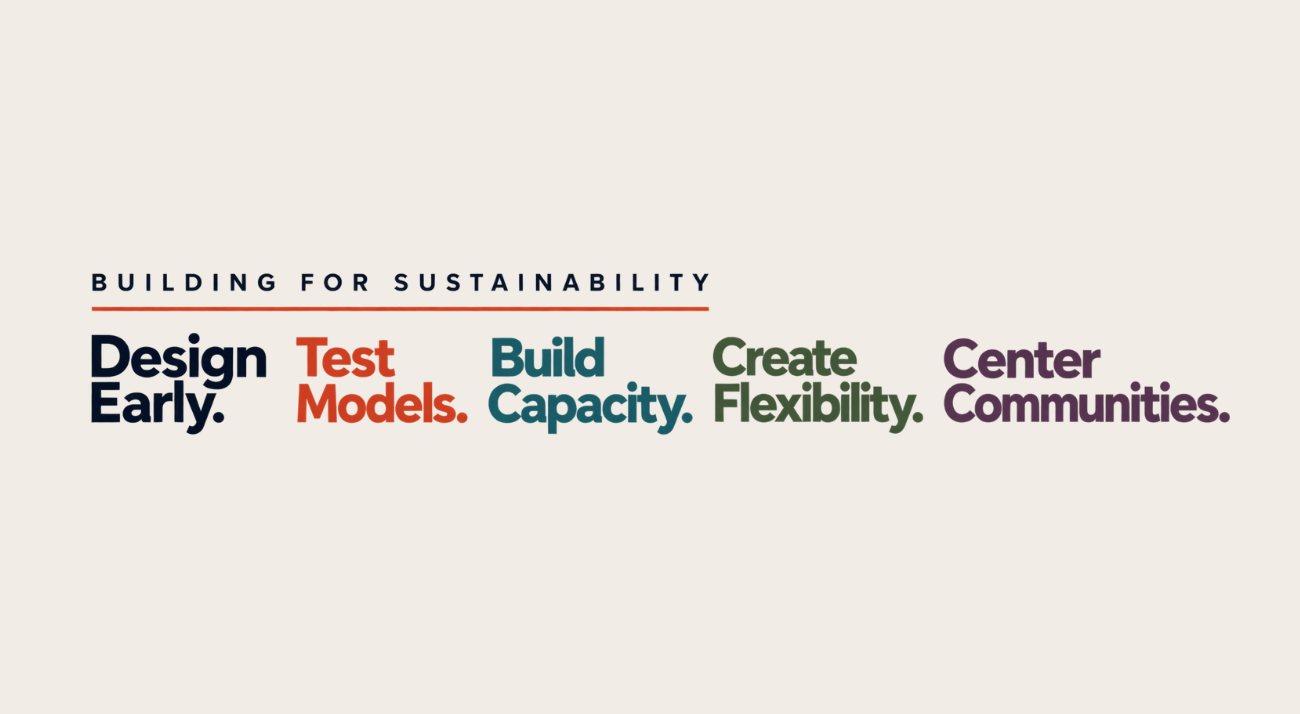
Building for sustainability will require action across organizations, funders, policymakers, and communities. Here are five places to start:
- Design for sustainability from the beginning. Treat sustainability as a design question, not an end-of-grant exercise. Build financing, workforce, and infrastructure into the program design.
- Test and learn from multiple financing models. Experiment with different combinations of public funding, reimbursement, philanthropy, and earned revenue. Share what we learn, including what doesn't work.
- Build capacity, not only programs. Invest in the staff, technology, systems, and organizational capabilities that allow community organizations to deliver programs while also pursuing and managing more sustainable financing models.
- Create more flexibility in how resources can be used. Policymakers and funders can remove barriers to reinvestment and make it easier to braid funding around the needs of communities rather than individual funding streams.
- Keep communities at the center. Organizations and communities closest to the work should help define what sustainability looks like. Financial sustainability isn't success if it comes at the expense of access, equity, trust, or mission.
None of this replaces the need for continued public investment. That remains foundational. The goal is not simply to find the next funding source. It is to build stronger systems with more ways to endure, adapt, and continue delivering what communities need.
Building for sustainability may require us to chart a path forward we cannot fully see yet. But we know enough to begin.