



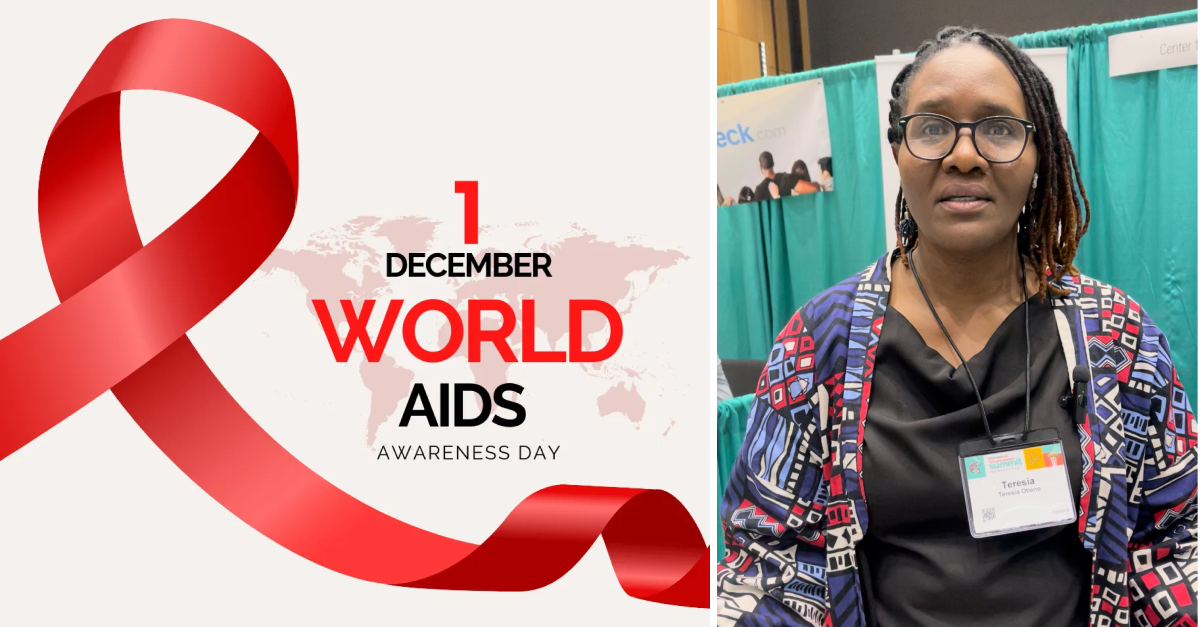
As we mark World AIDS Day, it’s worth remembering a truth that often gets lost in policy debates, funding battles, and pharmaceutical headlines:
HIV work is, and has always been, community work.
And no one embodies that more than the Community Health Worker (CHW). Teresia Otieno is a Community Health Navigator with the Center for Multicultural Health in Seattle. Teresia is originally from Kenya and has dedicated her life to supporting people living with HIV especially Black women and newly arrived immigrants navigating an American healthcare system that too often feels impenetrable.
Her message was clear and urgent:
A Complicated System Needs Real Guides
Teresia describes her role simply as “I help people access services and navigate the health system. The American health system is very complicated.” If you’re an immigrant, a person with limited English proficiency, someone dealing with poverty or an unstable immigration status, or someone who has experienced healthcare discrimination this “complicated system” becomes a wall.
CHWs like Teresia are the ones who help people climb that wall.
✅ They translate medical jargon.
✅ They explain insurance processes.
✅ They walk people to appointments.
✅ They rebuild trust in systems that have historically failed the communities most impacted by HIV.
And they do it because they’ve lived the experience. Teresia is a woman living with HIV herself. Someone once helped her navigate the system. Now she’s doing the same for others, every day.
The Barriers Are Real But So Is the Solution
Teresia named the obstacles plainly:
- Language barriers
- Insurance complexity
- Poverty
- Immigration challenges
- Lack of culturally competent providers
- Stigma that’s still present in too many healthcare settings
These barriers aren’t theoretical. They determine who gets care, who gets medication, who gets to stay in care, and who doesn’t. CHWs break through those barriers in ways systems alone can’t.
Pharmacies are a Critical Part of the Solution
One of the most striking parts of Teresia’s story was her view on pharmacies.
In Kenya, the pharmacy was a trusted community anchor, a place where she could get advice, guidance, and medication from people who understood her experience. Here in the U.S., she says, pharmacy care can be fragmented, stigmatizing, or disconnected from HIV care entirely.
She recalled being sent to pharmacies that: didn’t understand HIV, didn’t understand her accent didn’t know how to speak with people living with HIV and it made her feel judged.
Her conclusion was unambiguous. She explained that pharmacy programs are very important, but pharmacists need to be trained in community engagement and HIV care especially for immigrant and Black communities. This is why the integrated, stigma-free in-house pharmacy programs we build at Alchemy matter, why culturally competent pharmacists matter, and why investing in HIV-trained pharmacy teams isn’t optional, but essential.
If We Want to End the HIV Epidemic, We Must Invest in CHWs
The lesson from Teresia’s story is not complicated: Ending the HIV epidemic is not a biomedical challenge, it’s a community challenge. We can have the best medications, the best long-acting injectables, the best prevention tools but if people can’t access, understand, trust and navigate the system, then none of those tools reach the people who need them most.
CHWs are the bridge. They are the reason someone shows up. They are the reason someone stays in care. They are the reason someone survives.
On World AIDS Day, we honor people like Teresia and people who hold up entire communities quietly, tirelessly, and with deep love. They aren’t just part of the solution. They are the solution.

If we are going to end AIDS, we have to work with the community. We have to uplift Black communities, Black women, immigrants so they can access the services they deserve.
Teresia Otieno
Community Health Navigator
.jpeg)
