


Last fall, HRSA introduced a proposal for a 340B rebate pilot that was scheduled to launch on January 1, 2026 and limited to 2026 IRA-negotiated drugs. We wrote about that proposal and rebate model structures at the time, but the pilot was ultimately blocked in the courts. Earlier this year, HRSA introduced a revised rebate pilot proposal with expanded scope to include both 2026 and 2027 IRA-negotiated drugs.
At a high level, the rebate model changes the timing of 340B savings. Covered Entities would be required to purchase drugs at full price upfront and wait to receive the 340B benefit later in the form of a manufacturer rebate, effectively requiring safety-net providers to finance the program and take on the risk of delayed or denied payments.
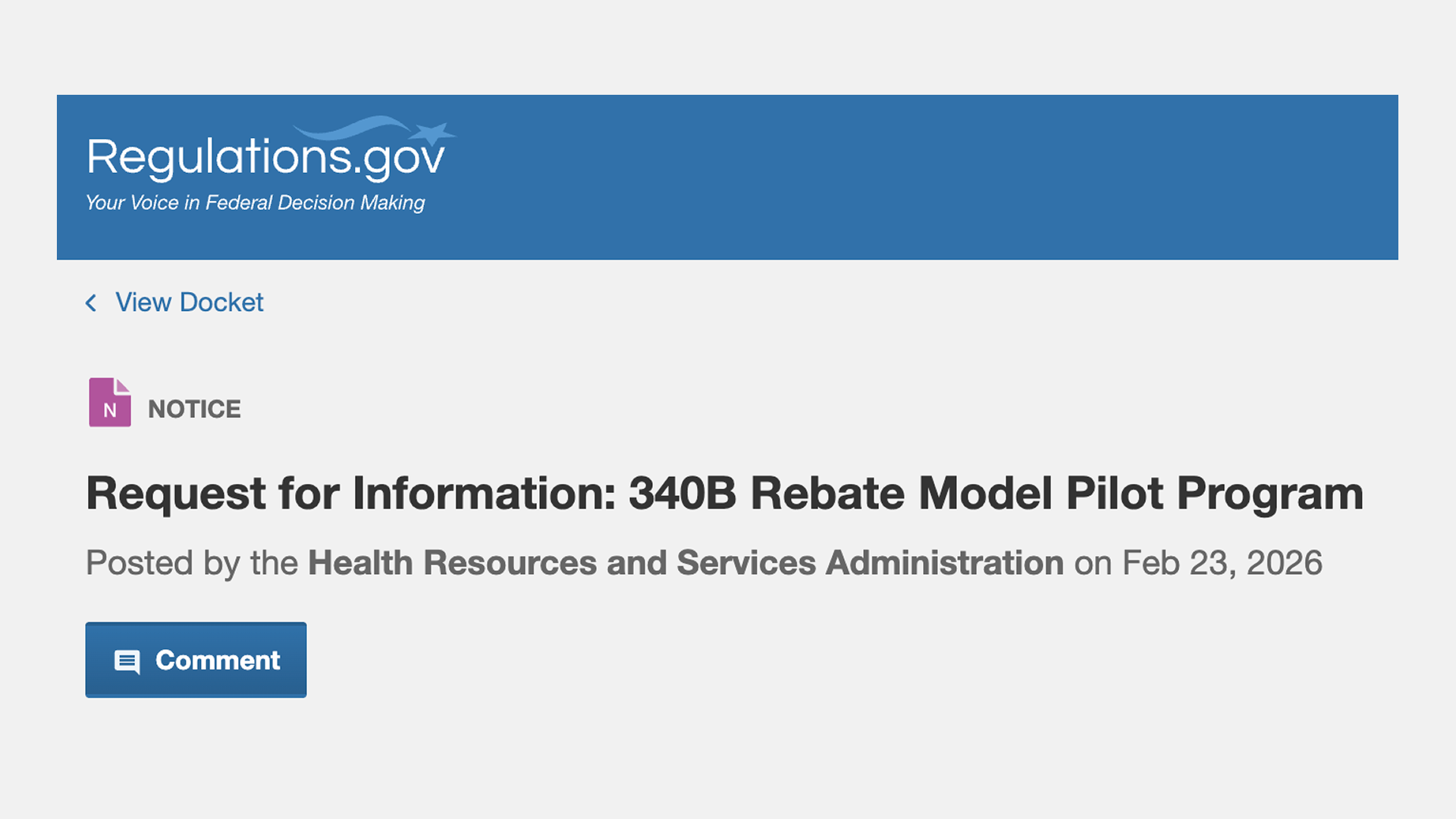
HRSA has opened a public comment period, or Request for Information (RFI), for covered entities and other stakeholders to share feedback on the cost, cash flow impact, and administrative burden this rebate model would impose. We submitted a formal response to HRSA’s Request for Information detailing the financial realities covered entities would face under a rebate model. Using real dispense data from a small FQHC with whom we partner, we calculated the increased working capital that would be required to operate their pharamcy. You can read our full response here:
The results are significant. For the drugs included in the pilot alone, the clinic would need an additional $23,000 to $51,000 in cash on hand each month to finance drug purchases at a price over 4x what it is today. That represents 79% to 144% of the pharmacy’s monthly 340B savings, funds that are currently used to provide discounted medications and fund patient services. In this clinic today, more than a quarter of patients receive medications at reduced prices funded by 340B savings. If those funds must instead be held as working capital, fewer patients will be able to receive discounted medications and other services funded by the program.
The public comment period is open until April 20, and we strongly encourage covered entities to submit detailed, data-driven responses. This is a critical opportunity for safety-net providers to help policymakers understand the real-world operational and financial impact of this proposal.
If you are a covered entity trying to estimate what this rebate model would mean for your clinic, or if you are planning to submit a public comment and want help thinking through the financial and operational impact, we would be glad to support. Please reach out to us at hello@alchemyhealth.com.


