



At a time when much of the U.S. HIV funding under pressure, one program has quietly moved in the opposite direction.
Since 2017, federal funding for the Housing Opportunities for Persons With AIDS (HOPWA) program has increased by more than 60 percent, reaching $529 million in FY2025. The growth has come despite divided government, fiscal tightening, and repeated proposals to eliminate the program entirely.
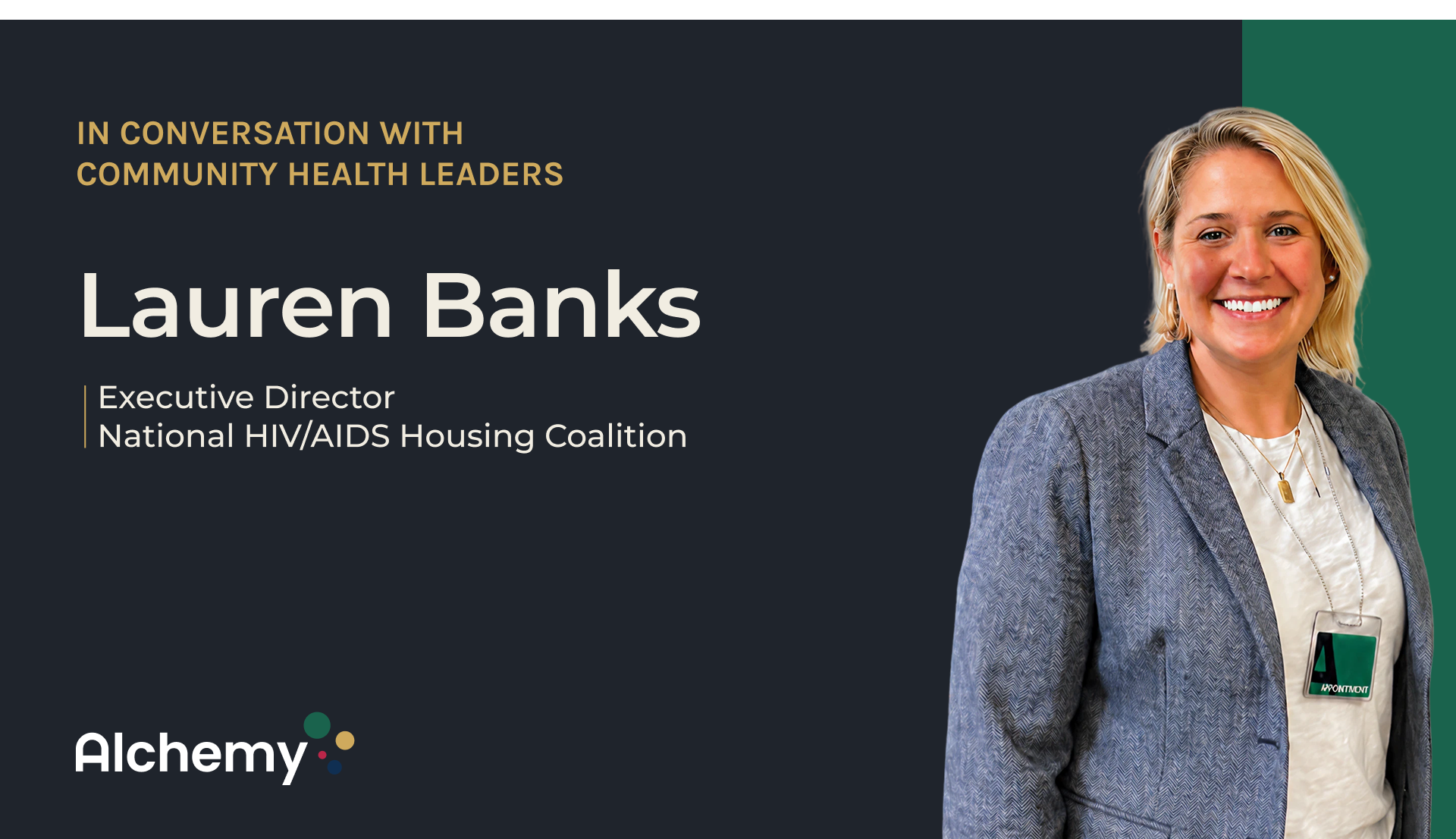
At the center of that effort is Lauren Banks, an Episcopal priest and Executive Director of the National HIV/AIDS Housing Coalition. Her work focuses on pushing federal policymakers to treat housing as a core component of HIV care, backed by evidence that people with stable housing are far more likely to stay in treatment and achieve viral suppression.
National data underscores the scale of the issue. Roughly 10 percent of people living with HIV in the United States are experiencing homelessness in a given year, with many more living in unstable or temporary housing situations that make consistent care difficult.
The consequences show up clearly in clinical outcomes. Federal data indicates that people with stable housing achieve viral suppression at rates above 90 percent, compared to roughly 77 percent among those who are unstably housed. Researchers and public health agencies have consistently found that unstable housing is associated with lower adherence to treatment, delayed entry into care, and higher viral loads.
A Different Kind of Advocacy
The question is not why housing matters. It is how funding for it has continued to grow in an environment where many HIV programs have remained flat.
At the National HIV/AIDS Housing Coalition, the strategy centers on training and building a national network of advocates with direct experience navigating both HIV and housing instability. Those advocates travel to Washington twice a year and meet with elected officials and staff, describing in concrete terms how access to housing changed their ability to remain in care.
The approach is grounded in the belief that policy arguments alone are rarely sufficient. “To hear from someone how housing was the key to getting mentally well, or the key to stabilizing their life, that’s what moves people,” Banks said.
Those meetings often center on specific moments: how someone was able to restart treatment after getting housing, or how they were able to stabilize after years of cycling in and out of care. For many lawmakers, those conversations have helped turn housing from an abstract budget line into a concrete part of the HIV response.
This work has not been straightforward or guaranteed. At one point, Representative Warren Davidson of Ohio introduced an amendment on the House floor to eliminate HOPWA entirely. The proposal advanced far enough that the program’s future was in real doubt, but it was ultimately defeated with bipartisan support. In subsequent budget cycles, proposals to eliminate HOPWA at the executive level have also failed to translate into appropriations cuts. The program now faces another test, with elimination proposed again in the President’s FY2027 budget.
What comes next
Today the work is not to prove that housing is effective, but to extend access to it. A significant share of people living with HIV continue to experience housing instability, and in many parts of the country, waiting lists for assistance stretch for years. “We’re not even close to where we need to be,” Banks said.
At the same time, the path forward is becoming clearer. Banks points to growing efforts to connect housing more directly with the rest of the HIV care system, including Ryan White and 340B funding, as well as a wave of locally driven initiatives that are expanding housing options in ways that do not rely on federal funding alone.
In Los Angeles, a community organization recently acquired and rehabilitated a home to house people living with HIV. In other cities, providers are working with land banks or local governments to repurpose vacant buildings. Across the country, housing programs are combining federal, state, and private dollars to move people off waiting lists more quickly. The approaches vary, but they reflect a shared recognition that progress depends as much on local initiative as it does on federal funding.
For Banks, that momentum is reason for optimism. The past several years have shown that funding can grow, even in a constrained environment, when the connection between housing and health is clearly understood and consistently reinforced.

Housing remains the number one unmet need of people living with HIV. Those who are stably housed are significantly more likely to be virally suppressed and live a healthy life.”

Lauren Banks
Executive Director, NHAHC

