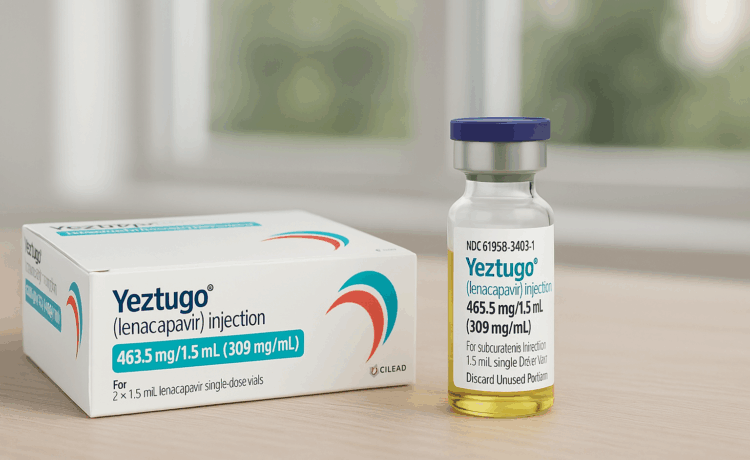
Almost one year ago, the FDA approved Yeztugo, the first twice‑yearly capsid inhibitor for HIV prevention, based on the PURPOSE 1 and 2 trials showing that 99.9% of participants on therapy remained HIV‑negative. This marked a critical juncture in the effort to end the HIV epidemic, offering an ultra long‑acting option that aims to meaningfully reduce the burden of adherence compared with daily oral PrEP and even existing Long‑Acting Injectables (LAIs).
.png)
We published early learnings implementing Yeztugo in September 2025, at a time when Yeztugo was not yet included on many insurance plan formularies. Since then, coverage across MCOs and PBMs has improved, our pharmacy teams have become more comfortable with injectable workflows, and a growing cohort of early Yeztugo users has now become eligible for (and received) a second dose, allowing us to observe early signals around adherence. To date, we have managed over $5M worth of Yeztugo fills, with each dose reflecting its own story of adoption, coverage, acquisition, and patient experience across our safety‑net clinic partners.
From our vantage point, long‑acting prevention is only as effective as the infrastructure supporting it, and entity‑owned, in‑house pharmacies are uniquely positioned to make products like Yeztugo work for safety‑net patients. In what follows, we share our data-driven learnings since last September, including early data on adherence, and highlight the interplay between entity‑owned, in‑house pharmacies and successful implementation of LAIs like Yeztugo.
1 in 10 of our Yeztugo Users are PrEP Naive
Back in September, we found that most plans only approved Yeztugo after patients tried out multiple other PrEP options and could not adhere and/or tolerate them (hence functioning as a “soft step” therapy). We operated on an assumption that plans were still parsing out how to manage the product on their formularies and would eventually ease patient eligibility requirements.
However, we’ve found that many insurers still consistently require soft step therapy, though some plans appear to be softening prior authorization requirements. As expected, patient switches to Yeztugo largely come from Apretude users, making up about 39% of all new Yeztugo users across our clinics. In addition, about an additional 31% of our sites’ new Yeztugo users came from Descovy. Given the challenges we see navigating various plans, we also validated whether any of our clinics have been able to get individuals who have never tried PrEP (hence “PrEP naive”) immediately onto Yeztugo instead of another PrEP product. We’ve been pleasantly surprised to see that one in every ten patients we have managed on Yeztugo had previously never been on PrEP.
Our Yeztugo Prior Authorization Approval Rate has Doubled
As of September 2025, our prior authorization approval rate for Yeztugo was 35%, which was expected since the product was relatively new and not on many plans’ formularies. Hence, we anticipated prior authorization approval rates to improve over time, with formulary exclusions no longer cited as a main reason for PA denial.
Indeed, our prior authorization approval rate has almost doubled since our September analysis, jumping from ~35% to 65%. In the first six months after Yeztugo launched, we saw formulary exclusion cited for almost half of all PA denials across our clinics; since December 2025 only ~¼ of PA rejections are for this reason..
Our data also suggest that time to PA completion has also significantly improved. In the first three months after Yeztugo’s launch, the median time from a prescriber writing the script to Yeztugo dispensation was over three weeks. In contrast, the first quarter of 2026 at our sites saw a median of 4 days, suggesting that the PA process has increasingly become standardized and consistent across PBMs (especially for Commercial plans). In fact, at some of our clinics, we have seen same-day Yeztugo administration, primarily due to plans that do not require a prior authorization for Yeztugo.
Successful dispenses of Yeztugo, especially earlier on, were heterogenous in quantity across our clinics, even when accounting for overall patient volume. Based on a closer look at our sites, we’ve found the following on-site factors to be key differentiators of success:
- Clinical Leadership Advocacy for Yeztugo. Strong belief in the product from a clinic’s leadership team often empowered health care providers and other stakeholders at the clinic to persist through the prior authorization process, even when arduous.
- Gilead Representative Presence. Some of our clinics note the robust presence of Gilead reps (sales reps, medical science liaisons, and field reimbursement managers) at their sites as key drivers of product education and supporting the clinics through the prior authorization process for patients.
- Close Coordination on PA Requirements. Because in-house pharmacists can complete a faster benefits investigation vs contract pharmacies, they can work closely with providers to outline the exact PA criteria needed. As such, providers adapt accordingly to ensure the necessary documentation is in place for patients who would benefit from Yeztugo.
Adherence to Yeztugo Second Dose is 87% with an In House Pharmacy
Given the high patient interest but low PA approval we documented back in September, we worried that the access challenges could dampen enthusiasm for the medication and cause a decline in Yeztugo scripts over time.
Luckily, despite challenges with PA approvals in the first few months after Yeztugo’s approval, patient interest in Yeztugo is driving significant volume towards the product. Across our clinics, we saw double the number of Yeztugo scripts in the first quarter of 2026 than the last quarter of 2025. As patients become more aware of the medication and providers become more comfortable managing Yeztugo, we anticipate steady growth in new Yeztugo starts in the coming few months.
What was particularly encouraging, though, is the adherence data. Across all our clinics, we saw 87% of patients eligible for their second dose receive on-time injections at Week 26, which is statistically in line with the adherence data per the PURPOSE 1 and 2 trials. Even if Yeztugo has not been available long enough to see what persistence looks like beyond 12 months, we feel more confident knowing that our patients who receive the second dose will be protected from HIV for the full year.
With an every six-month product like Yeztugo, we heard the trepidation from HIV community advocates about retaining patients in care. Instead, we invite clinicians to flip the script on the hesitation with a longer-acting injectable. Based on what we’ve seen in our data, entity-owned, in-house pharmacies enable adherence on longer-acting products that reflect clinical trial outcomes in a real world setting. We attribute this success to the following:
- Direct integration of pharmacy and clinical workflows. Unified management of both teams enable pharmacists to work in tandem with providers to manage prior authorizations and medication logistics, expediting time to administration and reducing the risk of patient dropoff.
- Thoughtful adherence tracking and intervention. Our Operations team tracks every patient and adherence so closely that very few patients are lost to care. Moreover, pharmacists embedded in the clinic via in-house pharmacy are deeply committed to ensuring everyone stays on their medication, with clinic infrastructure to lean on (e.g., outreach coordinators) in ways contract pharmacy relationships cannot commit to.
- Patient convenience drives adherence. For instance, one patient who is in a serodiscordant relationship used to set an alarm to take oral PrEP on time, leading to severe anxiety and paranoia that compromised their relationship. Switching to Yeztugo, however, helped the patient recover mentally and heal their relationship while protecting them from HIV.
Our metrics on adherence to Yeztugo is something we’re deeply proud of at Alchemy, as our clinics work with some of the most underserved populations in the US with social determinants of health (SDoH) that make it incredibly challenging for them to adhere to medications. Achieving this benchmark with such historically hard-to-reach groups underscores the effectiveness of entity-owned, in-house pharmacy models in overcoming systemic barriers to care.
Conclusion
We at Alchemy believe that the combination of LAIs and entity-owned, in-house pharmacies is the best pathway to achieve the protection with PrEP needed to end the HIV epidemic for everyone, everywhere. Pharmacy ownership and co-location enables better coordination between the care provider and the pharmacy to ensure a seamless patient experience, translating into optimal patient outcomes. Over the past year, we have seen prior authorization approvals climb, time‑to‑dispense collapse from weeks to days, and real‑world Yeztugo adherence among safety‑net patients match PURPOSE trial outcomes. Our clinics are proof that the right clinical infrastructure unlocks the full potential of Yeztugo and longer-acting options in the HIV and PrEP space. Yeztugo is a critical new tool to serve our patients, but it will only reach its full potential if clinics and pharmacies are designed around the people who need it most. We will continue to partner across the HIV ecosystem to ensure marginalized communities can access these innovations and stay protected over time.
We strongly urge safety net providers serving individuals who need or want PrEP to assess whether an in-house pharmacy would be viable for them to better serve their patients. For long-acting products like Yeztugo, an entity-owned, in-house pharmacy can bring clinical trial promise into real world delivery.

Coordination always happens [with LAIs] . But with an in-house pharmacy, it’s just that much closer and you close the loop very fast
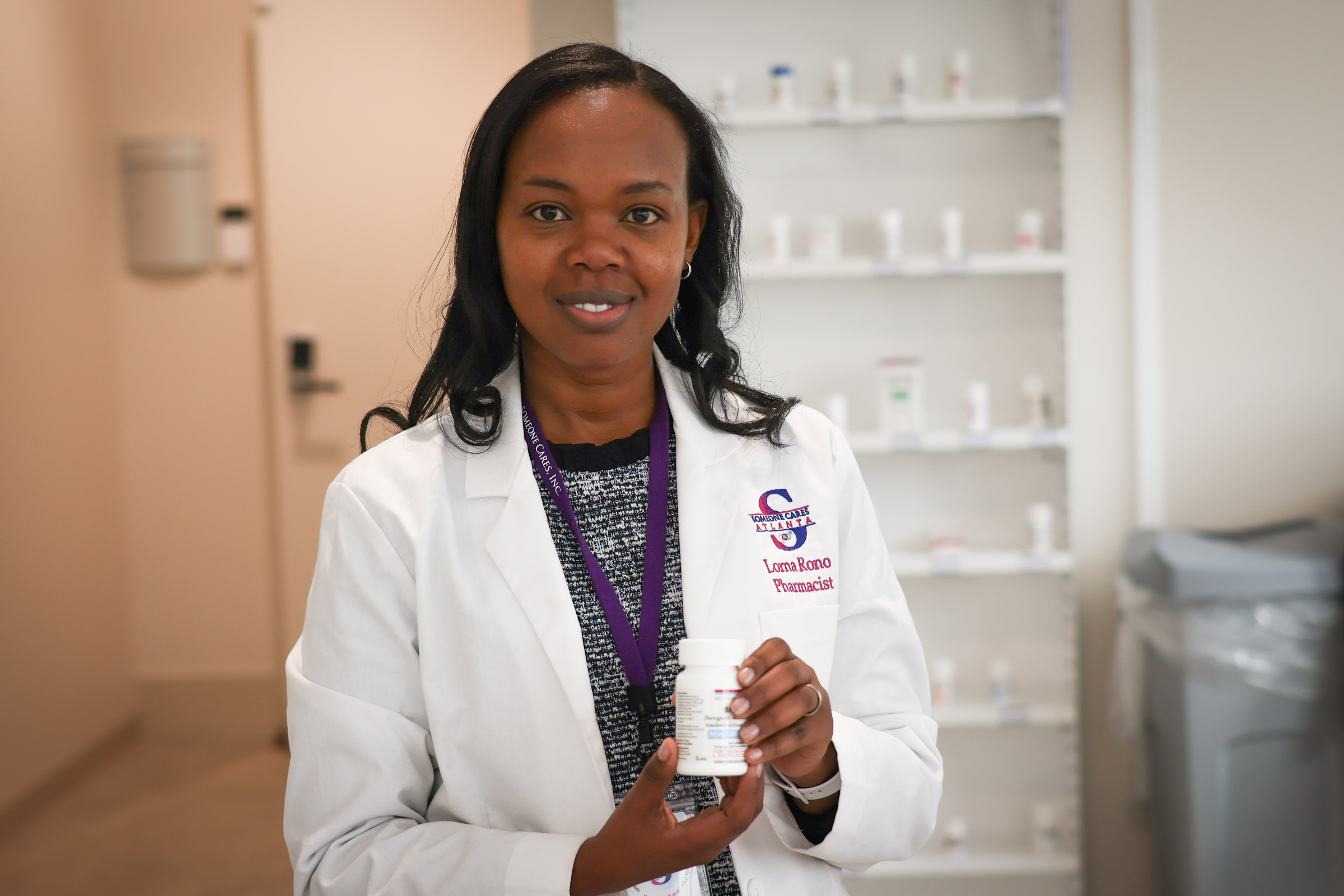
Lorna Kirui Rono, PharmD, MBA, AAHIVP
Pharmacist in Charge, Someone Cares